Wednesday, January 31, 2007

Why Do I Shit Blood And Liquid

Spain: Spain

To find the history of mutuality must go back to the eighteenth century, a period in which the pension scheme for staff has its first manifestations. In 1835 he first adopted the principle of "stratification" and passive pensions begin to be seen in budgets Ministry of Finance and the Treasury. But not until the twenties of last century when they begin to proliferate number of institutions, assistance, under various titles such as pawnshops, mutual funds and other denominations.

Over time, these institutions continue to grow in parallel with the needs of family protection and health of workers. Thus, in 1975 Spain had a total of 65 consortia, comprising, among others, to 300,000 civil servants from different groups. These mutual funds had their own rules, with different ranges and different requirements in regard to benefits to beneficiaries. Thus, while some possessed some others just gave sufficient coverage to answer the most basic needs. The absence of clear regulation about it took place also caused a major unevenness in the contributions of the mutual. Yes emphasized, however, a common feature in all of them: they were set up to alleviate the shortcomings of the Social Security system and staff is that even today is hard to imagine, in those years as common as the simple risk disease was not covered for public employees. The high rate of inflation that Spain had to endure, the effect of the first oil crisis undertook the disappearance of most of them.

existed as a serious health and administrative staff with respect to these workers, which is why in 1975 establishing the Special Regime of Social Security officials that are part of government and administration of justice in the national and military forces, as well as beneficiaries of the above. To implement this protection Mutual created three officials, with legal personality and its own, each attached to the Ministry which is part of the staff, the officials are related to these entities and acquire mutual status, which entitles them to enjoy, among other services, healthcare and pharmaceutical industries as provided in Laws.

The principles that define the Administrative Mutualism are equal in attendance, and mutual participation in the direction of the body, through the General Council, the Standing Committee of the Council and the Provincial Committees, participation is by through their union representatives and decisions are made by the Directorate General, who assumes the responsibility for coordination, management and inspection activities. Other principles characteristic of the Mutual are the quality of care and freedom of choice, as Mutual may choose both the borrowing entity such as doctors and hospitals of their choice. For this reaches agreements with the entities, sets the rules of the system, monitors the quality of care, acts as an intermediary in disputes between institutions and manages mutual and other benefits directly.

The Mutual mentioned are:
General Mutual State Civil Servants, MUFACE , created in 1976, is attached to the Ministry of Public Administration through the State Secretariat for Administration Public Special Scheme managed by the mandatory Social Security for Civil Servants.

  • Social Institute of the Armed Forces, ISFAS , established in 1978, is under the Ministry of Defense through the Under Secretary of Defense that manages the Special Scheme compulsory social security of staff working in the Armed Forces .
  • General Mutual Judicial MUGEJU , created in 1978, is attached to the Ministry of Justice through the Ministry of Justice manages the mandatory Special Conditions of the Social Security Administration officials of Justice.
In September 2005 the total number of holders and beneficiaries of the Mutual rose to 2,120,088 people. Of this, 1,584,908 are for MUFACE (74.8% of total), 447,273 to ISFAS (21.1%) and the remaining 87,907 to MUGEJU (4.15% of total).

care to provide care to beneficiaries (the health care plan is approved in the General Regime) MUFACE , ISFAS MUGEJU and have agreements with private insurance entities and the National Institute Social Security (INSS) to offer mutual this alternative within the compulsory insurance, this feature set a home market with the following characteristics:


  • The relationship between mutual funds and insurance companies based on both signed agreements on the basis of a fixed premium per person established by the mutual fund, regardless of place of residence of membership.
  • Any insurance company can apply to join the agreement if it meets the requirements of the resolutions in force, which basically refer to the authorization as an insurance company in the form of health care throughout the national territory and Availability subagreements delegations own or with others in all provinces.
  • establishing agreements for one year with possibility of extension in the next two years.
  • The price, as well as the membership is compulsory for mutual.
  • The mutual may, during the first month of each year, changing supplier freely and without cost, whether the National Institute of Social Security (INSS) or a concerted private companies.
  • The demand for these services for the mutual benefit is not guided by the price (irrespective of the entity chosen concerted, the cost to the officer's exactly the same: for 2005 the monthly contribution of officials to MUFACE , ISFAS MUGEJU and correspond to 1.69% of their assets at any time regulator is set to Rights trading purposes liabilities), but mainly by the proximity and perceived quality of services, both optional box as concluded hospitals.
The above characteristics have an important implication for the definition of the services market: unlike what happens in the market for voluntary health care insurance, which public health can be considered a determinant of demand, or a limiting factor of market power, but not an actual competitor, in the market for health care insurance concerted public health itself should be considered a competitor, in fact in September 2005 from 15.81% of the mutualists were assigned to the Public Health (Social Security or military health), giving even the case of the regions such as Navarra (41.91% of the mutualists) and Asturias (37, 44%) where Social Security is the first entity arranged by number of holders and beneficiaries.

In 2005, in addition to the concert with the National Institute Social Security and Social Security Treasury, there are 9 private concerts: Adeslas , Aegon , Asisa , Caser , DKV , Groupama , Igualatorio Surgical Medical College Santander, Madrid The Fair and Mapfre Caja Salud (Note that Sanitas is not present in the market for healthcare insurance arrangement). 79% of the market of public officials focused mainly on the 2 entities, Asisa with 39.1% and Adeslas with 36.9%.

Monday, January 29, 2007

Microsoft Wireless Mouse Ce0560 Windows 7 Driver

Administrative Mutualism: The Private Sector

In Spain there are five significant subsectors within the private health sector:

1. Private healthcare services contracted by the public. We are a group of hospitals and private clinics (finance and public procurement, private provision).


2. Private social enterprises with public funding. (public finance, procurement and private provision), consists of three components:

  • The Administrative Mutualism, whose members have chosen the private provision;

  • partner companies;

  • The Workers' Compensation Mutual

3. The Health Concessions. public hospitals built with private investment under agreements that guarantee the investor the capitated financing with public funds, the comprehensive health care to the residents of a region for periods of 10 or more years and renewable.

4. Private Health Insurance , operating generally under the regime of double coverage. The public insurance is compulsory and universal (financing, purchasing and private provision)

5. Private Sub "pure." User pays out of pocket for health care it needs, without the intervention of any insurer, public or private (financing and private provision, private purchase individual). It is very difficult to quantify the economic volume of this activity, although considered very minor, due to the high cost of long-term treatment and surgery, so it tends to focus on specific private consultations, and in some cases, inexpensive surgical procedures in order to avoid long waiting lists in the public system or to receive health services not covered by the system of private health sector público.El future "pure" is secured by specific characteristics and the existence of groups population and types of medical activity in this sector has its share of the market that it could even be expanded both in private practice for certain medical specialties, such as hospitalization for some population groups.

For more information on Private Health Sector in Spain discharged into this link the document "The Private Health Sector in Spain" (click on the link and repeats the window that appears click on the download link)

private healthcare services contracted by the system public.

Most concerted private provision is for hospital care, although there are other contracted services such as laboratories, radiology cabinets, etc, but much less weight. Over 30% of hospital beds are privately owned and its main public sector clients, private insurers, the Mutual of Accidents and Occupational Diseases, partner companies and users who pay directly servicio.Aunque no major private hospital networks, if there is agreement with certain insurers ( Asisa , Adeslas , Dkv ) and growing trend towards the association. Among the independent medical insurers are the Hospiten Group, Tenerife, and Dexeus Institute, which belongs to the American company Columbia Healthcare Corporation.

There is also a conspiracy to transport sick health care consists of ambulances, collective vehicles, ambulances care, all-terrain vehicles, hybrid vehicles, aircraft ambulance, Red Cross and 061 for medical emergency vehicle. The system of public sector concert with the private sector could become a future if it completes the introduction of an organized competition in the provision of health services, bringing the private sector can demonstrate its full potential.

Private insurance

Within private insurance sector can identify in a first level two submarkets: the sub-market of voluntary insurance and the submarket of staff public administration. The difference between the two markets lies in pricing, in the first, are the insurance companies who set the price, while in the second case is determined by the Administration.

With regard to voluntary insurance, anyone can apply, but due to universal public health system this means that 12.5% \u200b\u200bof the population has doubled (the largest public and private contract). Prices vary greatly depending on age and sex of the applicant, while not prohibitive, since the average cost of the premium for a man of 30 years starting from € 40 per month, while for women is a little higher, around € 50 a month and in some cases in addition to the monthly or yearly premiums to pay a fee per consultation.

Private insurance can be used either as a complement or alternative to public health (the latter is that of State officials), the advantage of private insurance is that companies have their own network of hospitals, clinics and laboratories , so that policyholders do not have to wait so long for treatment. It is important to note that many of these companies have waiting periods that can range from several months to 1 year before they can receive some services, especially in the for maternity and surgery, additional companies can insist that patients use only doctors who are members of their group. However, most have programs that refund 80% of the fees charged by physicians outside the group. Private insurance companies are the most important health
Adeslas , Asisa , Sanitas , DVK and Mapfre Caja Salud .

7.05 million people now have insurance Healthcare, 0.8 billion of insurance in Reimbursement and 1.5 million in insurance compensation or allowances, that adding them together represent approximately 21% of the population with private health insurance. In previous accounts includes the majority of public servants clustered on Mutual Administrative , which are publicly funded choice between public and private system, this group has 2.5 million people representing almost 5% of the population and 85% choose the private option.

For more information on Private Security in Spain download at this link document "Private Health Insurance in Spain" (click on the link and repeats the window that appears click on the download link)

Health Grants: public sector partnerships to manage the provision services.

Among the many figures that have been experimenting to ensure the provision of health services appears a novel: the "public works concession", a figure which allows a private company eligible for the construction and / or management of a public work for several decades, thus receiving public funds until the company in question and logically amortized cost, profit. For the health sector, public administration has prepared the land and a tender calling for firms interested in investing in the construction of a hospital, as consideration for this investment, the administration allows the contractor operating the hospital built for a term of 10 or 15 years extendable 10 or 15 years, assuring an annual capitation payment for each citizen residing in its area of \u200b\u200binfluence, at the end of this period, the Hospital should be given to public administration. This model guarantees free for the citizen and equity, control and funding by the Public Administration.

The first experience of this kind are recorded at the hospital in Alzira (Valencia), where the Valencia "gave" the management of a health area (the region of La Ribera, with 250,000 inhabitants) to a Temporary Business (Adeslas 51%, 45% Bancaja and CAM, ACS-Dragados Lubasa 2% and 2%), who built a hospital, with a final investment of € 72 million for its operation.

After the first experience with the Alzira Hospital, the Generalitat Valenciana other concessions began it, with the aim of bringing people medical centers that can be seen without moving more than 30 minutes from their place of origin.

These awards ensure the presence of the largest insurers in the Valencian Community Adeslas (Alcira), Asisa (Torrevieja and Elche), DKV (Denia) and Sanitas (Manises)
alliances These private insurers financial sector entities ( Bancaja and Caja de Ahorros Mediterranean-CAM) have been the key to success in boosting concessions. The

Madrid Health Service has already started a similar process to award the construction and management of hospitals, beginning with the Madrid Valdemoro which faith in November 2005 awarded the company Capio and is expected to become operational by mid 2007.

For more information on health conseciones download this link document "Health in Spain Awards (click on the link and repeats the window that appears click on the download link)

Wednesday, January 24, 2007

John Deere 214 Technical Manual

Spain Spanish health: Summary of Current Health System

modern health system in Spain was born in 1978 when parliament approved the English Constitution. However, the system was not complete until it is approved General Health Law in 1986, which created the National Health System for the integration of various public health subsystems, their purpose is, according to Article 1, "the general regulation of all actions to enforce the right to health protection as recognized in Article 43 and related provisions of the Constitution. "

The English National Health System


The English National Health System is coordinated package of health services of the State Administration and health services of the Autonomous Communities. Integrates all functions and features health, liability of public authorities, the health service of citizens. Its most important features are:

  • The universal right to healthcare (covering approximately 99.4% of the population),
  • public funding through taxes (90% National 10% contributions and local taxes), and
  • The decentralization of management in regional governments.
completed the process of health transfers to the autonomous regions, responsible for the care and benefits health in the English territory health services of the Autonomous Communities ( The Departments of Health and Regional Health Services ), and in the case of Ceuta and Melilla, the National Institute for Public Health (INGESA). The State, through Ministry of Health , becomes the guarantor of the benefits in quality and quantity anywhere in the country. The network of hospitals associated with social insurance is managed by a government agency INSALUD; to fill supply gaps in public health services dependent on the government arranged with private hospitals for uninsured care public in various forms such as the specific services to reduce waiting lists, the assignment of the center to the public health system or the operation of a public facility under concession.

Health care is the provision of medical services (outpatient, surgical and / or hospital) and pharmaceuticals necessary to preserve the health of its beneficiaries, not of-pocket cost to users, since the autonomous region runs with the financing thereof, provided that the user has made to the nearest health center to receive the procedure for health card and for each dependent member, during which management should be selected from the list of medical equipment professionals in the health center, which has to be your "family doctor" who govern and monitor all activities required hospital care by the insured in case of not handling this the right health insurance card is limited to emergency medical treatment during illness or accident to the medical (minors and pregnant women retain the right to health care but are not registered). Foreigners can register, even though they are erratic.

Over 90% of the population uses this system for their medical needs, which is gateway to the family doctor to choose the free form and through which users access the rest of the system. Most patients get an appointment with your doctor within a day or two from the application, to consult a specialist, patients must be referred by their physician, except in an emergency. Hospital treatment is free and patients are also entitled to certain services, prosthetics, orthopedics, blood transfusions, etc. free of charge when necessary. Unfortunately, as in most European countries, waiting lists for specialist visit or for elective or not urgent are usually long.

Finally, the English public health system covers only health care (with some exceptions) in terms of dental health should be taken into account that Social Security only covers extractions, for both dental and other problems optical via private van. The English health system covers 60% of drug costs of drugs included in the official formulary, provided they are prescribed by a medical official prescription system and can only be dispensed in pharmacies, 40% is paid by each individual, some drugs not covered by social security.

Clicking on this link and download the button of the window that appears you can download the graph illustrating the financial flows from the English Health System: NHS Financial Flows .

statistical and financial data of English health system

Infrastructure: Spain in 2005 had 2,702 mobile health centers (6.3 x 100,000.) Public as a whole, and 157,926 beds set (3.59 x 100,000.), of which 66.5% were public even though Hospital Centers of the 779 registered only 38.6% were officers.

Human Resources: for the year 2,005 had registered 194,668 medical professional associations to a rate of 4.7 per 1,000 inhabitants, of which it is estimated that 20% leave the country in search of better conditions therefore the real rate is estimated at 3.9 per 1,000 inhabitants, 21,055 dentists (0.5 per 1000 inhabitants) and 225,487 nurses (5.5 per 1000 inhabitants). Health Centers for the year 2,003 29,428 physicians worked (0.7 per 1,000 inhabitants) of which 82.2% were family physicians and pediatricians, 17.8%, while in public hospitals worked for that year 54,298 physicians (1.3 per 1,000 inhabitants) of which 26.7% were of medicine and medical specialties, 18.2% were general surgeons from different specialties, 6.4% were gynecologists obstetricians, 5, 8% trauma, 4.6% paediatricians. Currently there is a shortage of nurses and physicians in the specialties of obstetrics and gynecology, pediatrics, anesthesiology, internal medicine, trauma and surgical specialties has led the regional government of Extremadura, Castilla-La Mancha, Catalonia and the Canary Islands, go abroad to recruit skilled workers.

Clicking on this link and download button window that appears you can download the paper: "Doctors Spain without."

utilization of health facilities in the year 2003 represents a rate of 7.4 per person per year, of which 86.8% were made by the family doctor and 13, 2% for the pediatrician. A specialized level in the same year the frequency of hospitalization was 0.12, with an average stay of 8.7 days, of which 77.9% were performed in public hospitals, specialist consultation frequency was 1 , 6, and the emergency of 0.5 per 1,000 inhabitants., of which 78.8% were treated in the system public surgeries were 95.5 per 1,000 inhabitants, of whom 73.2% were in the public system and 24.4% of the total were outpatient. Of the total 436 000 births, 23.9% were by cesarean section and 74% made in the public system.

As financial resources, total health spending for 2005 was estimated at 67.384 million euros (7.7% of GDP), which represents about 6.3% spending health insurance, 22.8% private spending is not safe and 71.4% went to the public spending of the latter, 91.9% were managed in a decentralized manner and only the 8.1% was in charge of central administration. Public spending is allocated 16% to primary care, 52% to hospital services and specialty pharmacy 22.3%, 4.1% for utilities and public health, 1.7% for transfers, prosthetics and therapeutic devices and, finally, 3.9% for capital expenditures.

Tuesday, January 23, 2007

Sores On Stomach For Over 1 1/2 Years

Spain: General information, territorial organization and population data

SPAIN (2006)

following information is presented in order to understand the context in which they operate Health Cooperative in Spain.

Official name: Kingdom of Spain
Form of Government: Parliamentary Monarchy .
Constitution: Promulgated on December 29, 1978
Area: 506,013 km ² .
Capital:
Madrid Currency: Euro (The old national currency, the peseta was replaced by the euro on 1-Jan-2002. From Jan. 1, 1999, the exchange rate is pegged to the value the peseta, with a fixed rate of 166.386 pesetas per euro)
Language: English (official), Catalan, Galician, Basque (cooficiales)
Administrative divisions: 17 autonomous communities and 2 autonomous cities (Ceuta and Melilla).
Other cities: Barcelona, \u200b\u200bSevilla, Valencia, Zaragoza, Malaga, Bilbao.
National holiday: October 12, date of discovery of America and the Feast of the Virgen del Pilar, patron saint of EspañaHabitantes: 44,108,530 inhabitants. (Referred to January 1, 2005)
The population density is 87.2 inhabitants per km ².
About 77% of the population is urban.

Territorial Organization

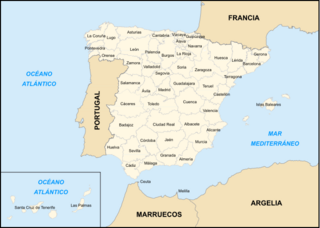
Spain is a nation made up of nationalities and regions, organized geographically into 17 regions and 2 autonomous cities, which have a broad level autonomy, legislative, budgetary, administrative and executive powers to the State exclusive guaranteed by the Constitution and every statute of autonomy.

are autonomous communities: Andalusia, Aragon, Asturias, Balearic Islands, Canary Islands, Cantabria, Castilla-La Mancha, Castilla y León , Cataluña (Catalunya), Extremadura, Galicia (Galiza), Comunidad de Madrid, Murcia, Navarra, La Rioja, Comunidad Valenciana (Comunitat Valenciana), Basque Country (Euskadi). Are the 2 autonomous cities, Ceuta and Melilla.
more
Communities 2 million inhabitants in order are (estimates for January 1, 2005) Andalusia (7,849,799), followed by Catalonia (6.995.2060, Madrid (5964143), Valencia (4,692,449), Galicia (2,762,198) and Castilla and León (2,510,849). The autonomous cities are the least populated, with Ceuta and Melilla 75,276 to 65,488.

Each autonomous region is subdivided into one or more provinces , making a total of 50, both communities, the provinces have their own capital cities. The major cities in population (data as of January 2005) are: Madrid with 3,155,359 inhabitants., Capital the Kingdom and the Commonwealth of the same name; with 1,593,075 inhabitants Barcelona, \u200b\u200bcapital of the province of the same name and community of Catalonia and Valencia with 796,549 inhabitants., capital of the province and the community same name; Seville with 704,154 inhabitants., capital of the province of the same name and community of Andalusia, Bilbao with 353,173 inhabitants., capital of the province of Vizcaya in the Basque Country. Other major cities are Zaragoza (647,373), Malaga (558 287), Las Palmas de Gran Canaria (378,628), Murcia (409 810), Valladolid (321 001), Palma Mallorca (375 773), Córdoba (321 164), Vigo (293,725), Alicante (319 380), Gijón (273 931), l'Hospitalet de Llobregat (252 884), La Coruña (243 349), Granada (236 982), Vitoria-Gasteiz (226 490), Badalona (218 553).

The main industries are textiles and clothing (including footwear), food and beverages, metals and metal products, chemicals, shipbuilding, automobiles, machinery and tourism, the more industrial areas in the past and present are: Madrid, Catalonia, Basque Country and Valencia, although today the Services sector with a contribution to GDP of 68% have moved to industry, this still represents 28.5% of GDP . In the agricultural sector with a contribution to GDP of 3.5% is also production of grain, vegetables, olives, wine grapes, beets, citrus, beef, pork, poultry, dairy products, fish. Workers are distributed as follows (2005): service 65.01%, industry 17.2%, construction 12.5%, 5.29% agriculture, the unemployment rate for 2005 was 9.16%.

Sunday, January 21, 2007

Do You Feel Nauseous After Flu Shot

S. Clinical Coop. Ltd - CES S. COOP: Spanish workers make the company where they worked in a successful

Spain has developed an apparently isolated from the process of "equalizing" a Health Cooperative Ownership Providers, whose services were initially the basic oral health, and which has been closely linked to the Cooperative Movement associated work in this country. Clinical

S. Coop. Ltd - CES S. COOP:

in Madrid in 1980, 27 dental technicians who worked in a private company dedicated to dentistry - Prodencol Clinics, SA-, were surprised when Fernando Villa Landa, an idealist and even then the owner, proposed to all they worked, without excluding anyone, to transform this society into a cooperative associated work. Came the revolution! What did it mean to be cooperative?, They wondered, meant that everyone would be the owners of the company and also self-managed.

workers received a settlement based on the time taken in that company, which provided for compulsory social capital as capital fixed and even volunteer. In the month of November 1980 when it was the first General Assembly in establishing the Cooperative Clinics S.Coop.Ltda CES - CES S. COOP ., Although not everybody were willing to devote time and assume the responsibilities of company management, the most motivated formed the Governing Council and the offices of auditors, and was elected as president Mr. Fernando Villa, former owner of the company.

boot Period (1980-1985)

workers have now become leaders found themselves in a new role with great responsibility, and a company that managed, with no knowledge and no apparent concerning cooperative, had three clinics, skilled professionals in dentistry, prosthetics, hygienists and also a good customer base so in this aspect, they had little concern. Aware of the need to acquire business management skills and cooperative, they found that by that time there were no cooperative training centers and the cooperative worker was almost unknown in Madrid, but in Andalusia was very active and cooperative so and undertook a series of courses conducted in Fuentevaqueros (Granada), together with other cooperatives in Andalusia. Loaded / ace illusion and eager to learn, on Friday night the miles traveled to reach point separated them on Saturday morning the course, returning on Sunday evening at Madrid.

is how the Founders were discovering the possibilities offered the cooperative, to acquire management skills that enabled them to analyze the present and future lines of business, so they can make appropriate decisions in each case made the chart what they wanted as a company and created the areas of Human Resources, Financial Officer, Production and Marketing. In this way envisioned the provision of dental services through a cooperative-type business, particularly for low-income communities by providing dental services at affordable prices, betting on the installation of facilities in neighborhoods within Region of Madrid since, to date, the public health service paid only inadequate services, while private dental services of a commercial nature, were too expensive for a large proportion of the population. Undertook the work of forming a given image quality, safe care style, confidence and retention is very important in a sector such as dental characterized by the opposite at the time, this was achieved and reinforced internally with teamwork actions that result in good customer service.

Growth period (1985-1990)

After 1985 was an increase in demand caused by economic expansion, declining to control issued by the Professional Associations and submitted a revision to the cooperative law, which allowed a larger and more diverse business cooperative. Between 1985 and 1990 soared cooperative, two clinics were opened, existing ones were modernized and diversified supply of services offered dental care to gynecology, family planning and provision of clinical examinations. The CES becomes effective business model, generating new cooperative projects in the sector dental, which have followed a parallel evolution, and in some cases encouraged by the CES and created, along with these, a cooperative of Second Grade, SANICOOP , to serve the primary cooperatives. By 1992 it had a portfolio of 96,000 customers and partners S.Coop.Ltda CES Clinics and passed the 90 workers health, so they had to make large investments in training to all partners.

In the same period the CES Clinics participated in the creation of the English Confederation of Associated Work Cooperatives (COCETA) and have been very active in Union of Cooperatives Working Madrid-UCMTA " the Director General of CES Clinics is currently the president of the Union through UCMTA , cooperate closely with the training and research activities of Cooperative Research Centre of the Universidad Complutense de Madrid and the international cooperative movement, where the Director General of CES Clinics served as a Program Coordinator the International Cooperative Alliance for Latin America : Program CICOPA-ICA. Commitment

social

Through a Non Governmental Organization (NGO) engaged in assisting developing countries ( Association for Cooperation with South-Las Segovias (ACSUR)) , CES clinics has started a "Campaign of Solidarity with the South", by which its customers are invited to contribute an amount equal to 1% of your account with the Cooperative, which immediately generates a contribution identical to the Cooperative for the same background. Thus there has been support for a Comprehensive Development Program in a Rural Community in Nicaragua, a program literacy and job training for rural women in El Salvador and a program of support to refugees in Guatemala.

The Role of Women in the Process.
Mrs. Maria del Carmen Garcia, president of the Governing Board, presented a report Cooperative management over 20 years of existence (from 1980 to 1999), and a beautiful story recounts the process lived by it since its beginnings as a simple worker in a particular company until his promotion to President of the Cooperative which is associated founder, click on the links below and on the bottom of the window that appears, click again where it says Download.

If the item you found it interesting, I invite you to make comments on it or on the blog in general.