SPAIN (2006)
 following information is presented in order to understand the context in which they operate Health Cooperative in Spain.
 Official name: Kingdom of Spain
Form of Government: Parliamentary Monarchy .
Constitution: Promulgated on December 29, 1978
Area: 506,013 km ² .
Capital:
Madrid Currency: Euro (The old national currency, the peseta was replaced by the euro on 1-Jan-2002. From Jan. 1, 1999, the exchange rate is pegged to the value the peseta, with a fixed rate of 166.386 pesetas per euro)
Language: English (official), Catalan, Galician, Basque (cooficiales)
Administrative divisions: 17 autonomous communities and 2 autonomous cities (Ceuta and Melilla).
Other cities: Barcelona, \u200b\u200bSevilla, Valencia, Zaragoza, Malaga, Bilbao.
National holiday: October 12, date of discovery of America and the Feast of the Virgen del Pilar, patron saint of EspañaHabitantes: 44,108,530 inhabitants. (Referred to January 1, 2005)
The population density is 87.2 inhabitants per km ².
About 77% of the population is urban.
Territorial Organization
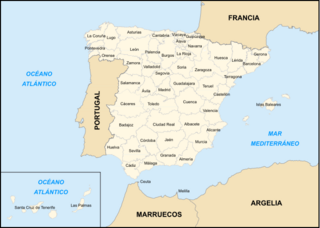
 Spain is a nation made up of nationalities and regions, organized geographically into 17 regions and 2 autonomous cities, which have a broad level autonomy, legislative, budgetary, administrative and executive powers to the State exclusive guaranteed by the Constitution and every statute of autonomy.
 are autonomous communities: Andalusia, Aragon, Asturias, Balearic Islands, Canary Islands, Cantabria, Castilla-La Mancha, Castilla y León
 , Cataluña (Catalunya), Extremadura, Galicia (Galiza), Comunidad de Madrid, Murcia, Navarra, La Rioja, Comunidad Valenciana (Comunitat Valenciana), Basque Country (Euskadi). Are the 2 autonomous cities, Ceuta and Melilla.
 more
Communities 2 million inhabitants in order are (estimates for January 1, 2005) Andalusia (7,849,799), followed by Catalonia (6.995.2060, Madrid (5964143), Valencia (4,692,449), Galicia (2,762,198) and Castilla and León (2,510,849). The autonomous cities are the least populated, with Ceuta and Melilla 75,276 to 65,488.
 Each autonomous region is subdivided into one or more provinces , making a total of 50, both communities, the provinces have their own capital cities. The major cities in population (data as of January 2005) are: Madrid with 3,155,359 inhabitants., Capital the Kingdom and the Commonwealth of the same name; with 1,593,075 inhabitants Barcelona, \u200b\u200bcapital of the province of the same name and community of Catalonia and Valencia with 796,549 inhabitants., capital of the province and the community same name; Seville with 704,154 inhabitants., capital of the province of the same name and community of Andalusia, Bilbao with 353,173 inhabitants., capital of the province of Vizcaya in the Basque Country. Other major cities are Zaragoza (647,373), Malaga (558 287), Las Palmas de Gran Canaria (378,628), Murcia (409 810), Valladolid (321 001), Palma Mallorca (375 773), Córdoba (321 164), Vigo (293,725), Alicante (319 380), Gijón (273 931), l'Hospitalet de Llobregat (252 884), La Coruña (243 349), Granada (236 982), Vitoria-Gasteiz (226 490), Badalona (218 553).
 The main industries are textiles and clothing (including footwear), food and beverages, metals and metal products, chemicals, shipbuilding, automobiles, machinery and tourism, the more industrial areas in the past and present are: Madrid, Catalonia, Basque Country and Valencia, although today the Services sector with a contribution to GDP of 68% have moved to industry, this still represents 28.5% of GDP . In the agricultural sector with a contribution to GDP of 3.5% is also production of grain, vegetables, olives, wine grapes, beets, citrus, beef, pork, poultry, dairy products, fish. Workers are distributed as follows (2005): service 65.01%, industry 17.2%, construction 12.5%, 5.29% agriculture, the unemployment rate for 2005 was 9.16%.


0 comments:
Post a Comment